 4.9 ★ (52 Reviews)
 Nationwide Delivery
Miniature Dachshund Breed Guide
Everything you need to know about these lovable, spirited companions before bringing one home.
📜 Breed History
The dachshund originated in Germany over 600 years ago, bred to hunt badgers and other burrowing animals. The name "dachshund" literally translates to "badger dog" in German (dachs = badger, hund = dog). Their long, low bodies and fearless personalities were perfectly designed for digging into badger dens.
Miniature dachshunds were later developed to hunt smaller prey like rabbits. Today, they're beloved family companions known for their playful personalities, loyalty, and distinctive appearance. The breed was officially recognized by the American Kennel Club in 1885 and has remained one of America's most popular breeds ever since.
🇩🇪 Origin
Germany, developed for hunting badgers and burrowing animals
📅 Recognition
AKC recognized in 1885, consistently among top 15 most popular breeds
😊 Temperament & Personality
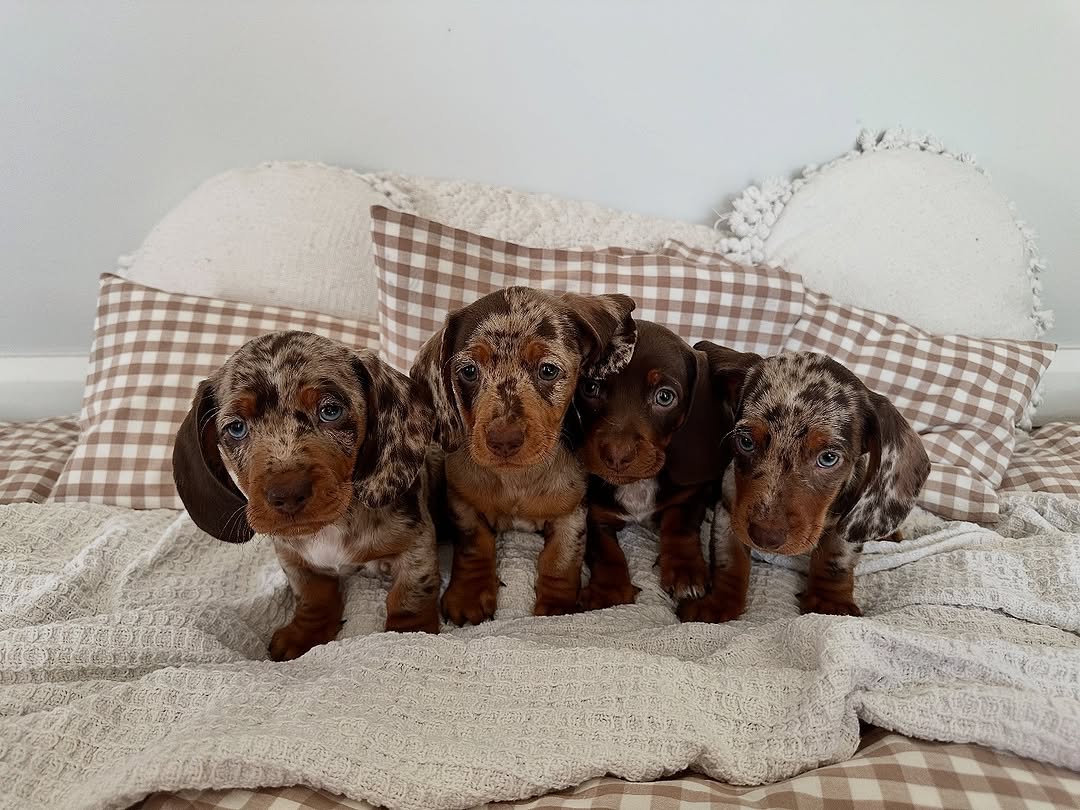
Miniature dachshunds are known for their big personalities in small packages. They're intelligent, curious, and often described as "brave little dogs" who aren't afraid to stand their ground. Their hunting heritage means they can be independent and sometimes stubborn, but their loyalty to family is unwavering.

Loyal & Devoted
Form strong bonds with their families and thrive on companionship
Playful & Energetic
Love to play, chase toys, and explore their surroundings

Intelligent & Curious
Quick learners who enjoy mental stimulation and problem-solving

Brave & Alert
Make excellent watchdogs despite their small size
Good with children: Yes, with proper supervision and socialization. Dachshunds are generally good with older children who understand how to interact respectfully with small dogs.
Good with other pets: Usually yes, especially when raised together. Their hunting instincts may make them chase small animals, so proper introductions are important.
🐕 Care Requirements
🏃♂️ Exercise Needs
Despite their small size, miniature dachshunds have moderate exercise needs. Daily walks, play sessions, and opportunities to explore are important for their physical and mental health. Aim for 30-60 minutes of activity daily, but be careful not to over-exercise puppies whose joints are still developing.
🧼 Grooming Needs
Smooth Coat
Weekly brushing with a soft brush, occasional baths. Minimal shedding.
Longhaired
Brushing 2-3 times weekly to prevent mats. Regular baths every 4-6 weeks.
Wirehaired
Weekly brushing, professional stripping 2-3 times yearly. Moderate grooming needs.
🏠 Living Environment
Dachshunds adapt well to apartment living and homes with yards alike. They're indoor dogs who should live inside with their families, not outdoors. Their short legs make stairs challenging, so consider using ramps to protect their backs from jumping.
🏥 Health Considerations
Miniature dachshunds are generally healthy dogs with a lifespan of 12-16 years. However, they are predisposed to certain conditions that responsible breeders screen for:
🦴 IVDD (Intervertebral Disc Disease)
The most common health concern in dachshunds. We screen all breeding dogs and maintain healthy body weights to reduce risk. Use ramps and avoid jumping to protect their backs.
👁️ PRA (Progressive Retinal Atrophy)
Genetic eye condition that can lead to blindness. All our breeding dogs are DNA tested clear of PRA.
🦵 Patellar Luxation
Kneecap displacement that can cause lameness. Regular evaluation and maintaining healthy weight helps prevent issues.
⚖️ Obesity
Dachshunds love to eat! Maintain a healthy diet and exercise routine to prevent weight-related back problems.
🍖 Nutrition & Feeding
Proper nutrition is essential for maintaining your dachshund's ideal body weight and preventing back issues. Choose high-quality dog food appropriate for their age (puppy, adult, senior).
🐶 Puppy (8 weeks - 1 year)
3-4 small meals daily. High-quality puppy food formulated for small breeds.
🐕 Adult (1-8 years)
2 meals daily. Portion control is crucial to prevent obesity. Measure food according to package recommendations.
👴 Senior (8+ years)
2 meals daily. Senior formula food with joint support supplements as needed.
⚠️ Important: Never free-feed dachshunds. Obesity is a serious health risk that can exacerbate back problems. Always provide fresh, clean water.
🎓 Training Tips
Dachshunds are intelligent but can be independent and stubborn. Consistent, positive reinforcement training works best. Start early with socialization and basic obedience.
- Start Early: Begin training and socialization as early as 8 weeks
- Use Positive Reinforcement: Treats, praise, and play are powerful motivators
- Be Consistent: Dachshunds will test boundaries; consistency is key
- Keep Sessions Short: 5-10 minute sessions are more effective than long ones
- Crate Training: Helps with housetraining and provides a safe space
- Socialize Early: Expose to various people, places, and situations
🐕 Ready to Add a Dachshund to Your Family?
Browse our available puppies, each with champion bloodlines, health testing, and AKC registration.
View Available Puppies Ask About Our Puppies